New - 2 Hours Ago


$275,000
Active
3
Beds
3
Baths
1458
Sqft
0.4745
Acres
119 Green Vista Dr, Pittsburgh, PA 15237
MLS#: 1777548


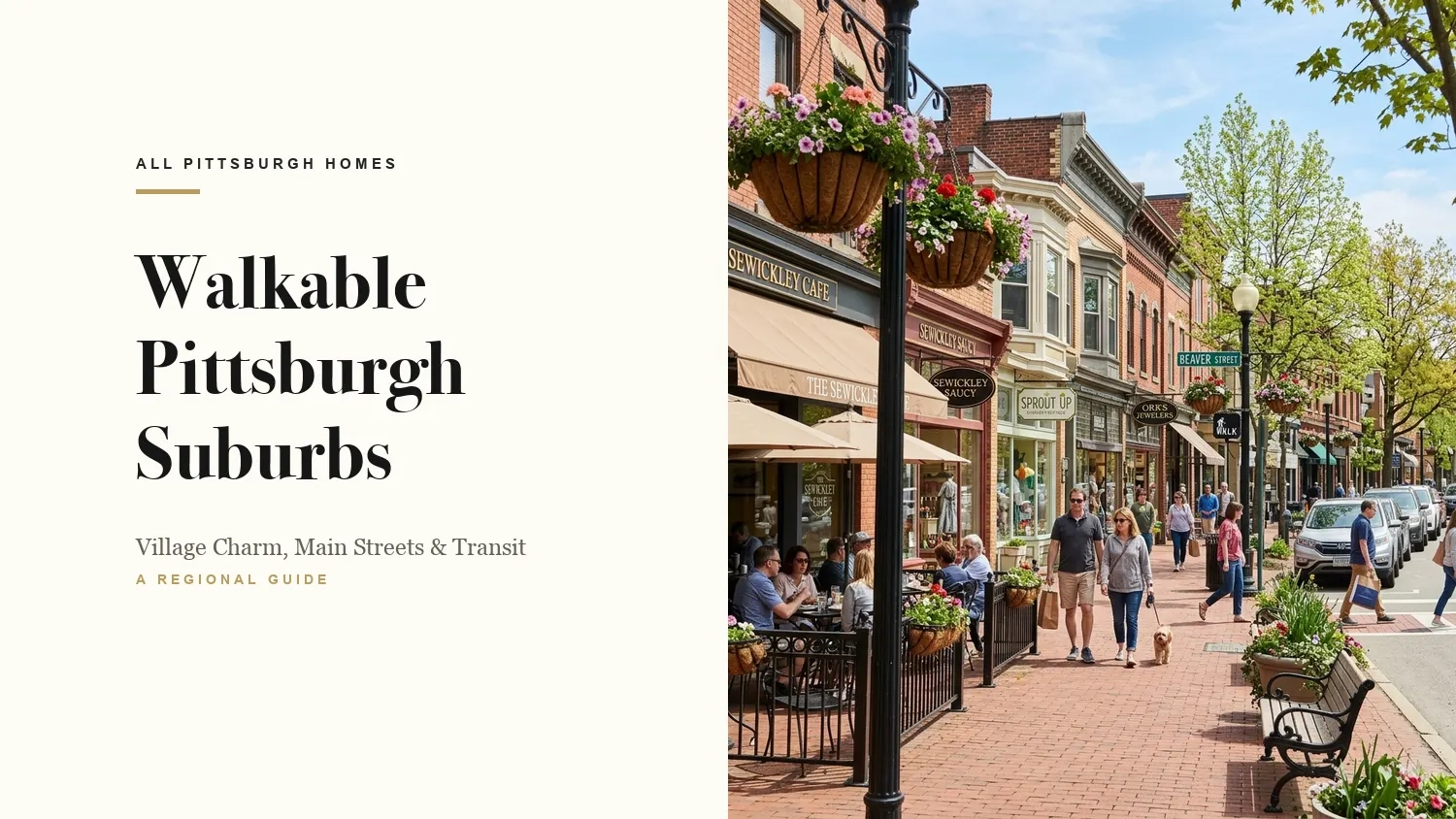
For homebuyers relocating to Southwestern Pennsylvania, one of the most common criteria sounds deceptively simple: enjoying suburban school districts and residential yards without being trapped in an automobile for every daily outing. In many Sunbelt or Midwestern metropolitan regions, suburban living requires auto-dependent subdivisions where walking to a local market, bakery, or coffee shop is physically impossible. Fortunately, Greater Pittsburgh operates under a completely different historical blueprint.
Because Southwestern Pennsylvania developed around extensive river corridors, commuter rail lines, and early electric streetcar networks, the region features an exceptional collection of historic boroughs and mature streetcar suburbs. These communities were established before the private automobile dominated American planning. They feature tight grid street patterns, commercial main streets lined with independent local shops, continuous sidewalk networks connecting schools directly to residential blocks, and direct public transit into Downtown Pittsburgh.
If you are exploring communities across Greater Pittsburgh and seeking the balance of suburban residential quality, top-tier public schools, and genuine pedestrian freedom, this guide evaluates the premier walkable options across the region. Below, we examine the seven most walkable suburbs in the Pittsburgh metropolitan area, analyzing their commercial main streets, architectural styles, transit access, and current real estate price brackets.
True walkability in Greater Pittsburgh requires more than a simple sidewalk in front of a home. Pedestrian connectivity across the region relies on four core structural pillars:
For buyers evaluating whether to settle in an urban core neighborhood or choose an established borough, reading this thoughtful perspective on walkable neighborhoods comparing city to suburbs provides helpful background on lifestyle trade-offs.
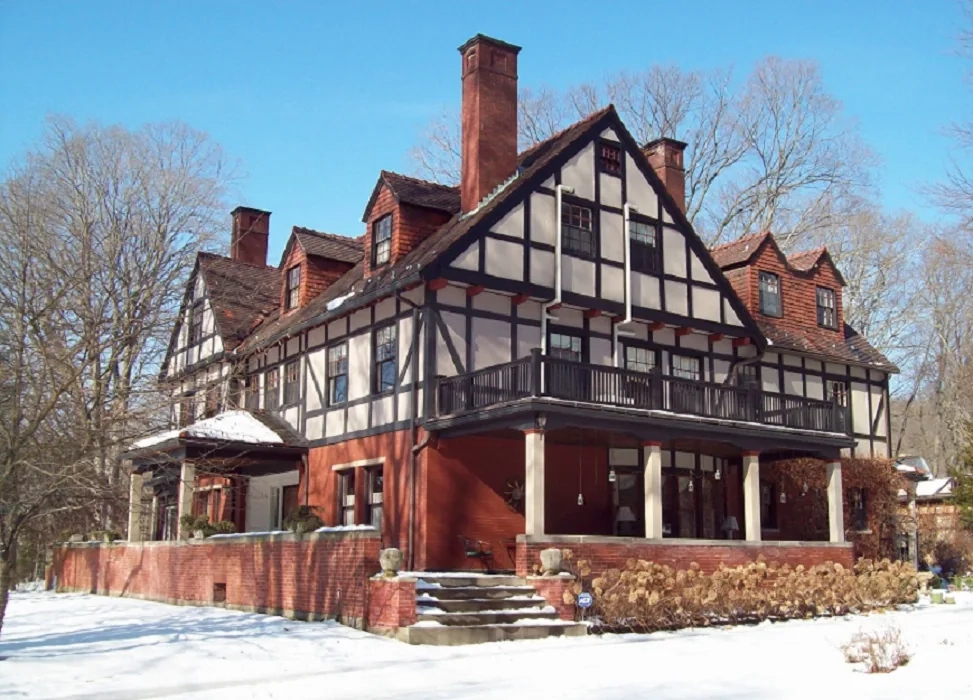
Positioned twelve miles northwest of Pittsburgh along the Ohio River, Sewickley Borough is widely regarded as the premier walkable village suburb in Western Pennsylvania. Centered around its historic business district along Beaver Street and Broad Street, Sewickley delivers an authentic small-town atmosphere that draws comparisons to historic East Coast villages.
Living in the Village of Sewickley means residents can reach daily destinations within five to ten minutes on foot. The commercial core features independent bookstores, gourmet coffee roasters, French bakeries, art galleries, boutiques, white-tablecloth restaurants, and the Sewickley Public Library. The borough also houses the Sweetwater Center for the Arts and the Sewickley Valley YMCA, providing community cultural and athletic programming for all generations.
Architecturally, Sewickley is renowned for its architectural preservation. Tree-lined streets feature magnificent Victorian mansions, Georgian Colonials, Craftsman bungalows, and charming brick townhomes dating from the late 19th and early 20th centuries. Children attend the highly regarded Quaker Valley School District, with Osborne Elementary located right in the borough corridor.
Real estate values in Sewickley reflect its exceptional prestige. Walkable townhomes and smaller detached residences typically range from $450,000 to $750,000, while historic single-family estates on prominent streets like Beaver Road, Thorn Street, and Centennial Avenue trade from $850,000 to more than $2,500,000.
Located in the South Hills just seven miles from downtown, Mt. Lebanon is the largest and most complete pedestrian-oriented suburb in Allegheny County. Unlike villages built in river valleys, Mt. Lebanon was master-planned in the early 20th century as a premier streetcar suburb along the ridge lines of the South Hills.
Mt. Lebanon features two vibrant walkable business districts: Uptown Mt. Lebanon along Washington Road, and the Beverly Road commercial district. Washington Road offers multi-block dining, coffee shops, professional offices, and civic facilities, anchored by the Clearview Common pedestrian square. Beverly Road provides a charming neighborhood commercial pocket with hardware stores, pizzerias, and local markets.
The defining transit advantage of Mt. Lebanon is the Pittsburgh Regional Transit Red Line light rail system, known locally as the T. With multiple streetcar stops scattered across the municipality, residents can walk from their homes to the platform and arrive in Downtown Pittsburgh in approximately twenty-five minutes. If you are comparing specific neighborhoods in this community, our detailed guide on the best neighborhoods in Mt. Lebanon PA profiles Virginia Manor, Mission Hills, and Sunset Hills in depth.
The housing stock consists primarily of stone Tudors, brick Colonials, and mid-century residences. Prices span from $200,000 to $350,000 for pre-war condominiums along Washington Road, $350,000 to $650,000 for classic brick single-family homes, and $750,000 to $1,800,000 for luxury properties in enclaves like Virginia Manor. If you are planning an upcoming move to this community, review our complete resource on moving to Mt. Lebanon PA.
Situated on the northern bank of the Allegheny River just seven miles northeast of Pittsburgh, Aspinwall Borough is one of the most uniquely walkable communities in the state. What sets Aspinwall apart from the hilly topography of Western Pennsylvania is its remarkably flat street grid, making walking, stroller pushing, and bike riding effortless for residents of all ages.
Aspinwall's commercial center runs along Commercial Avenue and Brilliant Avenue, offering specialty coffee houses, gourmet bakeries, independent diners, floral boutiques, and neighborhood pubs. The community also benefits from the Aspinwall Riverfront Park, a reclaimed industrial site transformed into a public riverfront green space featuring walking trails, native gardens, and kayak launches directly on the Allegheny River.
A major draw for families purchasing in Aspinwall is public education. Even though Aspinwall is a compact historic borough of less than 3,000 residents, it is part of the nationally ranked Fox Chapel Area School District. Children attend O'Hara Elementary School or walk to neighborhood academies, providing elite suburban academic credentials in an intimate village setting.
Housing in Aspinwall consists primarily of turn-of-the-century American Foursquares, Queen Anne Victorians, and solid brick two-story homes with welcoming front porches. Home prices typically range from $380,000 for homes needing cosmetic updates to between $525,000 and $750,000 for renovated four-bedroom properties with updated kitchens and detached rear garages.
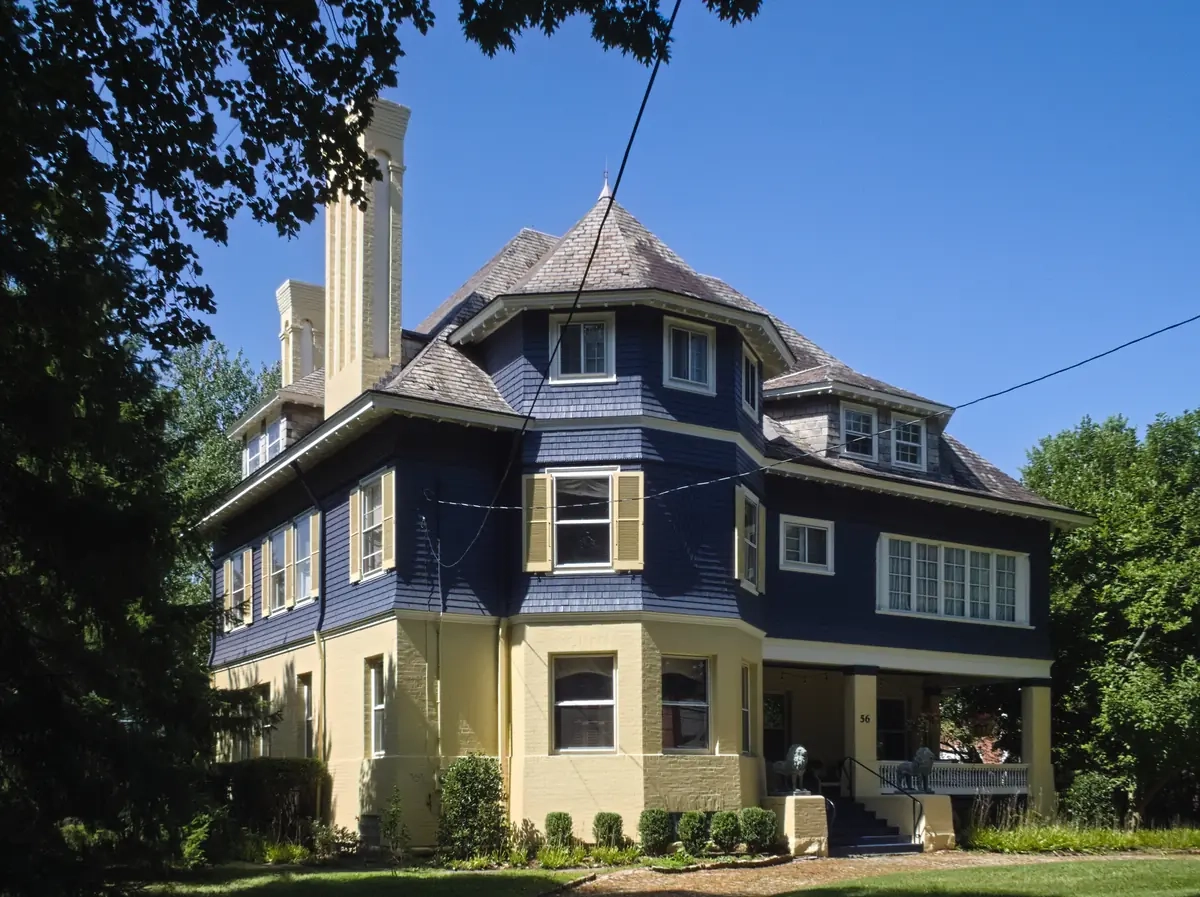
Located further up the Allegheny River valley about twelve miles northeast of Pittsburgh, Oakmont Borough is a quintessential historic American borough that blends riverfront heritage with a self-contained business district.
Oakmont's main corridor along Allegheny River Boulevard is famous throughout the region. It is home to the landmark Oakmont Bakery, the historic Oaks Theater (an independent cinema and live performance venue), neighborhood taverns, antique shops, and specialty meat markets. The downtown district features wide sidewalks, mature shade trees, and Victorian-era street lamps that foster an inviting evening stroll environment.
Residential neighborhoods in Oakmont extend outward from the commercial boulevard in a walkable grid toward the Allegheny River and the historic Oakmont Country Club, host of multiple U.S. Open golf championships. Housing stock includes brick bungalows, late-19th-century Victorians, American Foursquares, and modern riverfront condominium developments.
Oakmont operates within the Riverview School District, a small community school system where athletic events and high school performances serve as major civic gathering points. Single-family home prices generally range from $280,000 to $450,000 for charming three-bedroom homes, while larger historic properties and riverfront condominiums trade between $450,000 and $650,000.
For homebuyers seeking pedestrian living and strong transit connections at approachable price points, three Western Pennsylvania boroughs stand out as exceptional values:
Dormont Borough: Bordering Mt. Lebanon to the south and the City of Pittsburgh to the north, Dormont is a high-density streetcar community encompassing less than one square mile. The commercial spine along Potomac Avenue features brick-paved streets, eclectic cafes, the historic Hollywood Theater, and the massive two-acre Dormont Pool. With three Red Line light rail stations (Potomac, Kelton, and Dormont Junction), residents reach Downtown Pittsburgh in under twenty minutes without driving. Single-family home prices generally range from $220,000 to $380,000.
Carnegie Borough: Situated five miles southwest of Pittsburgh along Chartiers Creek, Carnegie has experienced a remarkable downtown renaissance along East Main Street. The corridor is populated by craft breweries, specialty coffee roasters like Carnegie Coffee Company, international bakeries, and the Andrew Carnegie Free Library and Music Hall. Commuters walk to the Carnegie Busway Station and ride the West Busway express directly into Downtown Pittsburgh in twelve minutes. Home prices range between $180,000 and $380,000.
Bellevue Borough: Located five miles northwest of downtown on the bluffs above the Ohio River, Bellevue is the anchor of the North Boroughs. Known for its sweeping wraparound front porches, classic Queen Anne Victorians, and Lincoln Avenue commercial corridor, Bellevue offers grocery stores, diners, and bakeries within steps of residential blocks. Express buses along Lincoln Avenue reach the cultural district in fifteen to twenty minutes, and home prices range from $180,000 to $375,000. If you are comparing city neighborhoods as well, our guide on the best Pittsburgh neighborhoods for young professionals provides useful comparisons with Lawrenceville and Shadyside.
To help prospective purchasers compare these walkable communities side by side, the table below synthesizes commercial street corridors, WalkScore ratings, public transit modes, school districts, and home price points:
| Suburb or Borough | Primary Commercial Street | WalkScore | Primary Transit Mode | Public School District | Entry Home Price | Median Single-Family Price |
|---|---|---|---|---|---|---|
| Sewickley | Beaver Street and Broad Street | WalkScore 88 | Route 65 / PRT Bus 14/21 | Quaker Valley | $450,000 | $850,000 |
| Mt. Lebanon | Washington Road and Beverly Road | WalkScore 84 | Light Rail T (Red Line) | Mt. Lebanon | $350,000 | $520,000 |
| Aspinwall | Commercial Avenue and Brilliant Avenue | WalkScore 82 | Route 28 / PRT Bus 75/91 | Fox Chapel Area | $380,000 | $540,000 |
| Oakmont | Allegheny River Boulevard | WalkScore 80 | PRT Flyer Bus 77 | Riverview | $280,000 | $420,000 |
| Dormont | Potomac Avenue and West Liberty Ave | WalkScore 86 | Light Rail T (Red Line) | Keystone Oaks | $220,000 | $310,000 |
| Carnegie | East Main Street | WalkScore 78 | West Busway Express | Carlynton | $180,000 | $260,000 |
| Bellevue | Lincoln Avenue | WalkScore 85 | Route 65 / PRT Bus 16/17 | Northgate | $180,000 | $240,000 |
Living in a walkable suburb fundamentally reshapes daily commuting by unlocking dedicated transit alternatives that avoid heavy highway bottlenecks. The table below details peak driving times versus public transit options to Downtown Pittsburgh and the Oakland medical and university center:
| Walkable Suburb | Highway or Transit Corridor | Morning Peak Drive Time to Downtown | Public Transit Time to Downtown | Peak Drive Time to Oakland |
|---|---|---|---|---|
| Sewickley | Route 65 (Ohio River Boulevard) | 25 to 38 minutes | 35 minutes (PRT Bus 14/21) | 35 to 50 minutes |
| Mt. Lebanon | West Liberty Ave / Light Rail T | 35 to 50 minutes (Tunnel delays) | 22 to 25 minutes (Red Line T) | 35 to 50 minutes |
| Aspinwall | Route 28 / Express Bus 75 | 18 to 30 minutes | 20 minutes (Direct to Downtown) | 25 minutes direct (Bus 75 to Pitt/UPMC) |
| Oakmont | Allegheny River Blvd / Hulton Bridge | 25 to 40 minutes | 35 to 45 minutes (Bus 77) | 28 to 42 minutes |
| Dormont | West Liberty Ave / Light Rail T | 30 to 45 minutes | 18 to 22 minutes (Red Line T) | 30 to 45 minutes |
| Carnegie | Parkway West / West Busway | 20 to 35 minutes | 12 minutes (West Busway Express) | 25 to 40 minutes |
| Bellevue | Route 65 / Ohio River Boulevard | 12 to 20 minutes | 18 minutes (PRT Bus 16/17) | 25 to 35 minutes |
For professionals working downtown or in Oakland, communities like Mt. Lebanon and Dormont (via light rail), Carnegie (via the dedicated West Busway), and Aspinwall (via the 75 bus to Oakland) eliminate daily parking stress and highway delays.
While the lifestyle advantages of living in a walkable borough are significant, buyers transitioning from modern suburban master plans must prepare for several unique operational realities:
| Borough or Suburb | Dominant Housing Stock | Typical Lot Size | Parking Reality | Inspection Focus Areas |
|---|---|---|---|---|
| Sewickley | Victorian, Craftsman, Queen Anne | 0.10 to 0.25 Acre | Shared driveways, detached rear garages | Historic slate roofs, lead plumbing lines |
| Mt. Lebanon | Stone Tudors, Brick Colonials | 0.15 to 0.25 Acre | Single integral garage, overnight street ban | Terracotta sewer laterals, municipal dye tests |
| Aspinwall | Turn-of-the-century Foursquares | 0.08 to 0.15 Acre (Flat grid) | Alley-access detached garages | Basement stormwater drainage, aging masonry |
| Dormont and Bellevue | Brick Foursquares, Bungalows | 0.08 to 0.12 Acre | On-street parking permits, narrow driveways | 100-amp electrical panels, older boiler systems |
| Oakmont and Carnegie | Bungalows, Brick Victorians | 0.10 to 0.18 Acre | Detached single-car garages, on-street mix | Aging cast iron stacks, knob-and-tube wiring |
Key practical considerations to evaluate before submitting an offer include:
Sewickley and Mt. Lebanon are widely regarded as the most walkable suburbs in Greater Pittsburgh. Both communities feature extensive main street districts with grocery shopping, dining, parks, and schools accessible on foot from surrounding residential streets.
Yes, suburbs along the Pittsburgh Regional Transit Red Line light rail corridor, such as Mt. Lebanon and Dormont, make car-free living entirely feasible. Residents can walk to daily groceries, dining, and board the train directly to Downtown Pittsburgh and the North Shore.
Aspinwall (served by Fox Chapel Area School District), Mt. Lebanon (Mt. Lebanon School District), and Sewickley (Quaker Valley School District) offer the highest-ranked public education systems among walkable suburban municipalities in Allegheny County.
Bellevue, Carnegie, and Dormont offer the most affordable entry points into walkable suburban living near Pittsburgh, with median single-family home prices generally falling between $200,000 and $350,000.
Choosing the ideal walkable suburb involves aligning public school priorities, commute patterns, architectural preferences, and acquisition budgets. Prospective residents can use the following four-quadrant framework to identify their ideal community:
To track active real estate listings across Sewickley, Mt. Lebanon, Aspinwall, Oakmont, and other pedestrian-friendly boroughs, explore the comprehensive homebuyer resource portal to monitor new inventory, analyze price trends, and compare regional walkability scores.


