


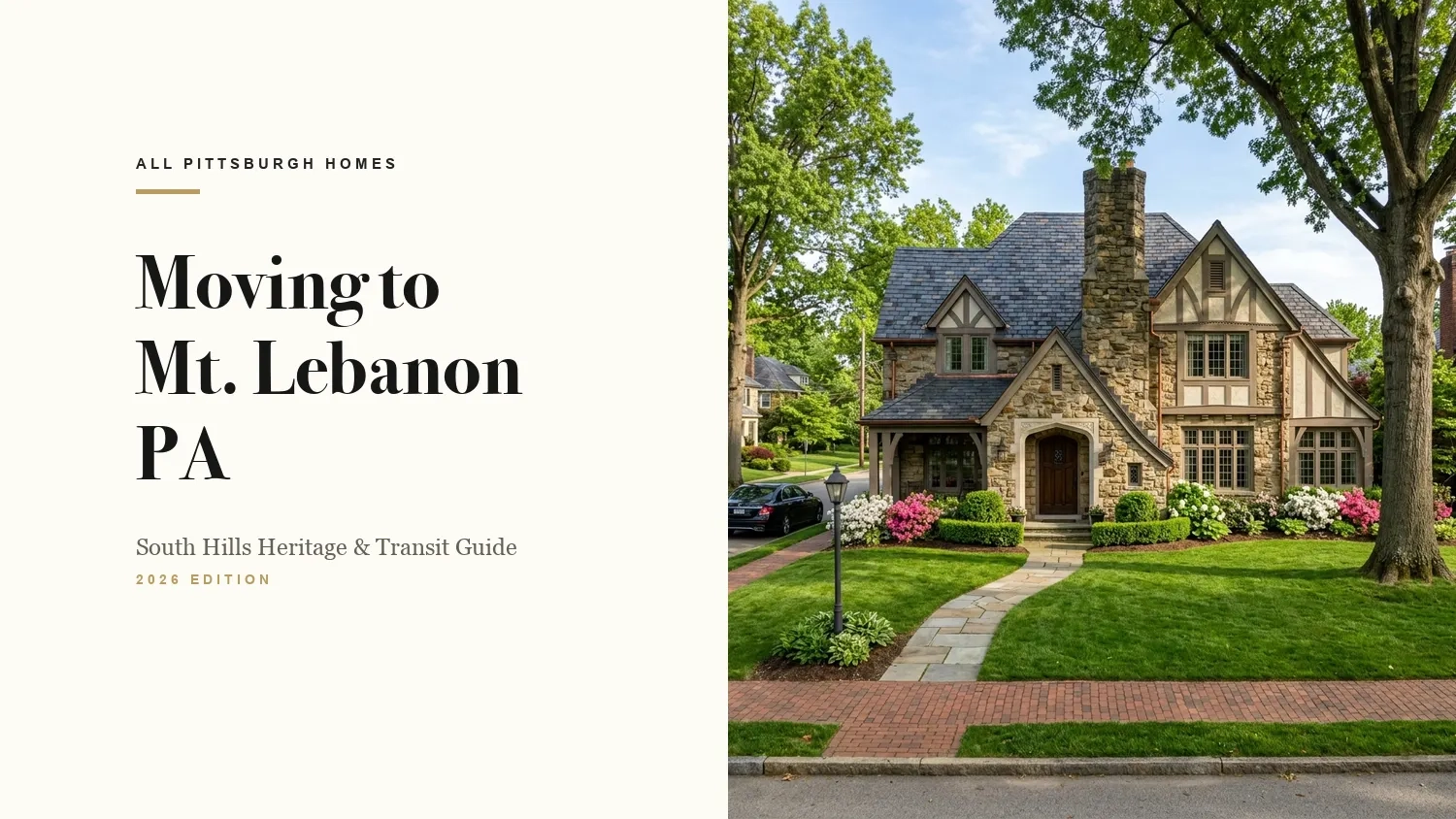
When homebuyers research established suburban communities with nationally recognized public schools, authentic architectural character, and genuine pedestrian walkability, Mt. Lebanon is inevitably the standard against which all other South Hills municipalities are measured. Established as a township in 1912 and developed largely as a transit-oriented streetcar suburb throughout the 1920s and 1930s, Mt. Lebanon delivers a rare combination of urban convenience and residential stability.
Relocating here involves embracing a distinct daily rhythm. From morning walks to local coffee spots along Washington Road to neighborhood sports at the municipal recreation park, Mt. Lebanon fosters deep civic roots. However, purchasing an older home in an established municipality introduces practical factors, including municipal parking regulations, vintage mechanical systems, and Allegheny County property tax assessment dynamics. This guide provides an objective, analytical perspective on what life is truly like in Mt. Lebanon.
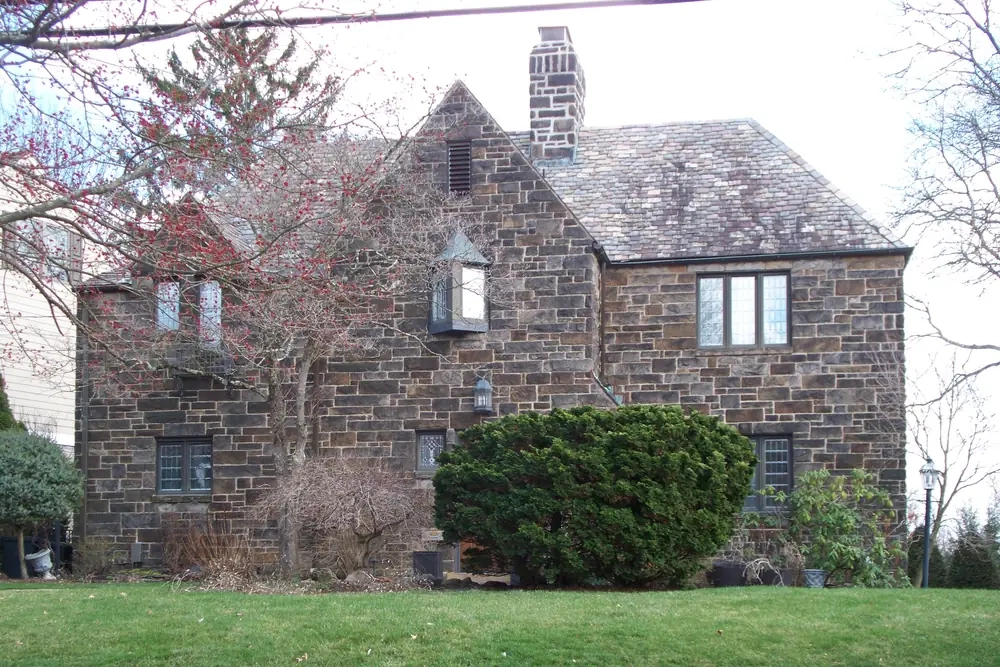
1. Overview: The Historic Character of Mt. Lebanon
Mt. Lebanon encompasses approximately six square miles in the South Hills region of Allegheny County, located six miles south of Downtown Pittsburgh. Home to more than 33,000 residents, the municipality is celebrated for its dense canopy of mature trees, stone monuments, and cohesive neighborhoods that reflect early twentieth-century American town planning.
Unlike newer suburbs designed exclusively around highway interchanges and strip shopping plazas, Mt. Lebanon was deliberately laid out around public transit corridors and pedestrian pathways. The community features an interconnected grid of streets, continuous concrete sidewalks on almost every residential block, and stone curbs. Homebuyers seeking homes for sale in Mt. Lebanon find an enduring sense of place supported by stringent municipal zoning, active historic preservation, and community pride.
2. Walkable Streetcar Layout and Commercial Districts
What immediately distinguishes Mt. Lebanon from outer-ring suburbs is its pedestrian orientation. The township was conceived before widespread automobile dependence, prioritizing foot travel and streetcar access for daily living.
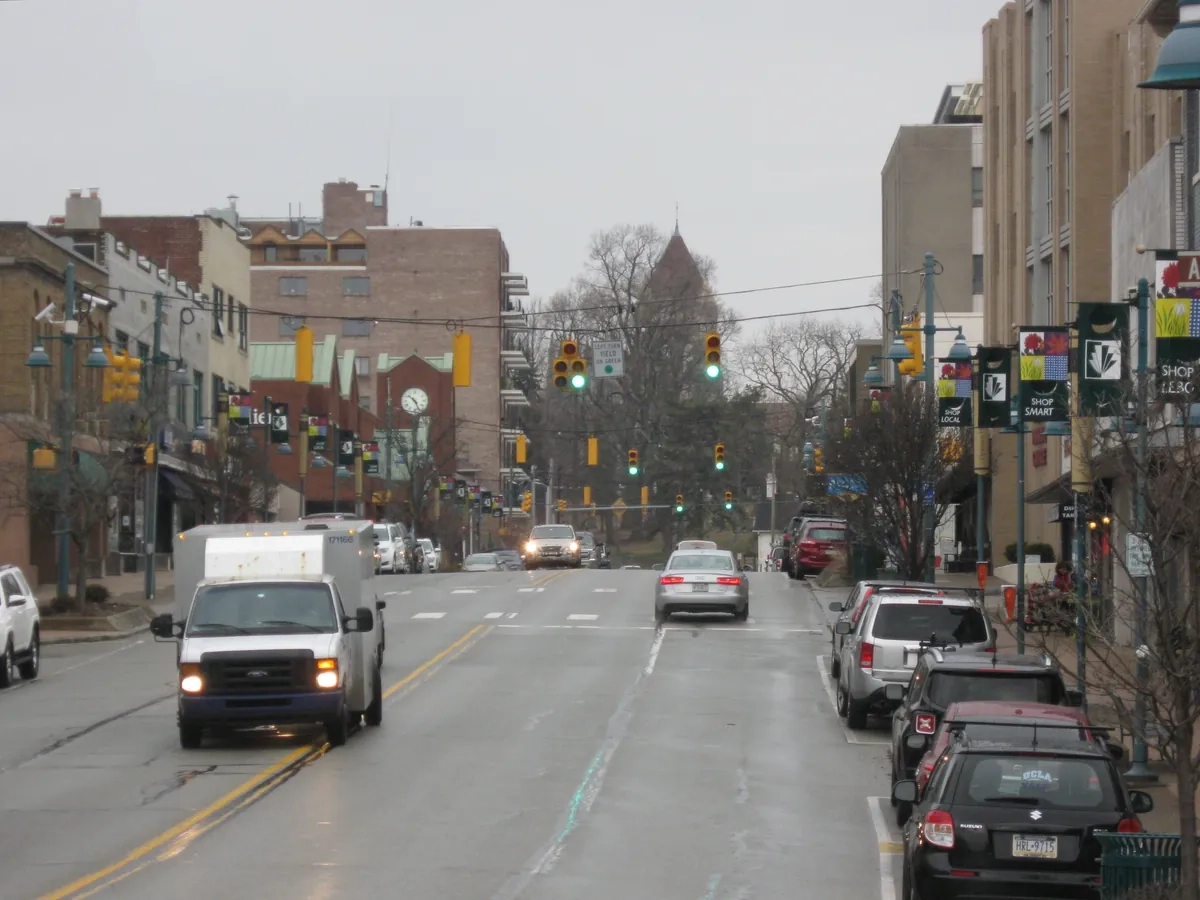
Residents enjoy two primary commercial downtown districts: Uptown Mt. Lebanon along Washington Road and the Beverly Road commercial corridor. Uptown features independent coffee roasters, bakeries, casual and fine dining, professional services, and the municipal building. Beverly Road serves as a beloved neighborhood shopping center anchored by local pizzerias, an independent grocery market, coffee shops, and specialty retail. To see how Mt. Lebanon compares to peer communities across Western Pennsylvania, explore our comprehensive walkable Pittsburgh suburbs guide.
Living here means residents can leave their cars parked in driveways for entire weekends. Whether walking children to youth soccer games at Mt. Lebanon Park, visiting the public library, or stepping out for dinner, daily errands can be achieved comfortably on foot. For relocation buyers moving from transit-rich urban centers like Boston, Chicago, or New York, this pedestrian infrastructure provides an immediate sense of ease.
3. Mt. Lebanon School District and the Walk-to-School Culture
Public education is a primary consideration for families purchasing real estate in the municipality. The Mt. Lebanon School District serves approximately 5,400 students and consistently ranks among the top public educational institutions in both Pennsylvania and national benchmarks.
The district operates seven neighborhood elementary schools: Foster, Howe, Jefferson, Lincoln, Markham, Mellon, and Washington. These schools are situated in the center of residential neighborhoods. Perhaps the most defining operational feature of Mt. Lebanon elementary schools is that the district does not operate a traditional yellow bus fleet for elementary grades. Children walk to school each morning accompanied by parents, neighbors, and an organized network of municipal crossing guards stationed at major intersections. This walk-to-school tradition builds lasting neighborhood relationships.
| Elementary School | Neighborhood Attendance Zone | Approx. Enrollment | Middle School Feeder | Campus & Walkability Profile |
|---|---|---|---|---|
| Foster Elementary | North Central / Rockwood corridor | 360 students | Mellon Middle School | Centrally located near public library; exceptionally high pedestrian walking share |
| Howe Elementary | Sunset Hills / Southeast pocket | 420 students | Mellon Middle School | Direct access to Sunset Hills; close to Castle Shannon light rail station |
| Jefferson Elementary | Uptown / Middle School campus | 390 students | Jefferson Middle School | Collocated on central campus; walking distance to Uptown Washington Road shops |
| Lincoln Elementary | Beverly Heights / Northeast pocket | 440 students | Mellon Middle School | Direct pedestrian access to Beverly Road commercial district and playgrounds |
| Markham Elementary | Markham / Bird Park / Hoodridge | 380 students | Jefferson Middle School | Situated along rolling wooded terrain; direct access to Bird Park trail network |
| Mellon Elementary | Central Washington Road corridor | 350 students | Mellon Middle School | Pedestrian connections to municipal sports fields and public transit stops |
| Washington Elementary | Southwest residential corridor | 410 students | Jefferson Middle School | South of Washington Road; walking access to athletic fields and neighborhood parks |
Secondary Schools and Campus Infrastructure
As students advance, they attend one of two intermediate facilities: Andrew W. Mellon Middle School or Thomas Jefferson Middle School. Both facilities feature historic collegiate-gothic brick architecture integrated with renovated STEM laboratories, fine arts rooms, and athletic grounds. Students then unify at Mt. Lebanon High School, which underwent a comprehensive modern renovation exceeding $100 million. The high school features collegiate-style science lecture halls, an expansive performing arts theater, an Olympic-depth aquatic complex, and modern athletic facilities.
4. Commuting via the T Light Rail vs. Highway Tunnels
Commuting from the South Hills into Downtown Pittsburgh can present highway bottlenecks for drivers relying on vehicular river tunnels. However, Mt. Lebanon provides a proven public transit alternative: the Pittsburgh Regional Transit light rail system, locally known as "the T."
The Red Line travels directly through Mt. Lebanon, with stations and street stops including Mt. Lebanon Station, Poplar, Arlington, Castle Shannon, and St. Anne's. When riding the T from Mt. Lebanon, trains operate along dedicated rights-of-way and travel through the Mt. Washington Transit Tunnel, bypassing surface automobile congestion on West Liberty Avenue and avoiding bridge delays entirely. For a comprehensive review of South Hills transit routes, review the commuter guide to the T light rail and Pittsburgh tunnels.
| Transit Mode / Travel Route | Key Access Points & Arterials | Off-Peak Travel Time | Morning Peak Travel Time | Commute Characteristics & Traffic Notes |
|---|---|---|---|---|
| PRT Red Line Light Rail ("The T") | Mt. Lebanon Station, Poplar, Arlington | 20 to 25 minutes | 22 to 28 minutes | Dedicated right-of-way through Mt. Washington Transit Tunnel; zero bridge traffic |
| Driving via West Liberty Ave / Liberty Tunnel | Route 19 through Dormont | 18 to 22 minutes | 35 to 50 minutes | Substantial morning slowdown at southern tunnel portal and Liberty Bridge deck |
| Driving via Banksville Rd / Fort Pitt Tunnel | Banksville Road to I-376 East | 20 to 24 minutes | 35 to 55 minutes | Heavy vehicular merge at Parkway West inbound tunnel entrance |
| Commute to Oakland Medical & University Hub | West Liberty Ave to Birmingham Bridge | 22 to 28 minutes | 40 to 55 minutes | Surface street congestion through South Side and Second Avenue |
| Pittsburgh International Airport (PIT) | I-79 South via I-376 West | 25 to 30 minutes | 35 to 45 minutes | Direct access through Scott Township or Upper St. Clair corridors |
5. Architectural Character, Construction Eras, and Home Prices
The residential housing stock in Mt. Lebanon is renowned for structural integrity and architectural craftsmanship. A substantial portion of the community is recognized on the National Register of Historic Places as the Mt. Lebanon Historic District, encompassing thousands of contributing residences constructed primarily between 1920 and 1945. Homebuyers interested in architectural heritage can read our historical background on historic residential architecture in Pittsburgh.
Residential avenues showcase a rich variety of architectural traditions. Buyers will encounter stone English Tudors with slate roofs and copper downspouts, formal brick Georgian Colonials, Spanish Mission Revival properties, stone Dutch Colonials, and Craftsman bungalows. These properties exhibit materials rarely matched in modern volume construction: quartersawn oak hardwood flooring, solid chestnut and gumwood moldings, hand-troweled plaster walls, leaded glass casements, and masonry fireplaces.
6. Neighborhood Enclaves: Virginia Manor to Sunset Hills
Mt. Lebanon comprises distinct residential enclaves, each offering a unique lifestyle and price profile. Prospective homebuyers can study our detailed analysis of the best neighborhoods in Mt. Lebanon to evaluate street-by-street options.
Virginia Manor
Virginia Manor is the community's premier historic estate enclave. Master-planned in the late 1920s by former Pennsylvania Governor Ralph E. Flinn, the neighborhood features winding roads, rolling topography, and stone estates set on half-acre to full-acre parcels. Architectural styles include English Manor, stone Tudor, and Georgian Revival designs trading between $750,000 and $1,600,000+.
Mission Hills
Mission Hills features distinctive Spanish Mission, Mediterranean, and English cottage architecture adjacent to the high school campus and Uptown Washington Road. With red clay tile roofs, stucco walls, and arched entryways, Mission Hills provides an intimate village atmosphere with home values generally ranging from $550,000 to $900,000.
Sunset Hills and Beverly Heights
Sunset Hills offers charming 1930s and 1940s brick colonials convenient to the Castle Shannon light rail station, with prices typically between $340,000 and $520,000. Beverly Heights provides brick colonials and Craftsman bungalows within a short walk of the Beverly Road shopping district, with prices ranging from $380,000 to $620,000. If you are comparing top South Hills municipalities, read our head-to-head comparison of Mt. Lebanon versus Upper St. Clair.
7. Municipal Parks, Ice Center, Golf, and Recreation
Mt. Lebanon operates an extensive municipal park and recreation system. Rather than relying on private club memberships, the municipality provides high-caliber public facilities accessible to all residents.
Mt. Lebanon Park, situated behind the high school complex, serves as the community's central recreation anchor. The park features an outdoor Olympic-sized municipal swimming pool, a year-round indoor twin-pad ice center, lighted clay tennis courts, platform tennis courts, and baseball diamonds. The Mt. Lebanon Public Golf Course, a historic 9-hole municipal facility established in 1907, provides an accessible golfing venue on Pine Avenue.
Throughout the township, neighborhood parks such as Bird Park, Robb Hollow Park, and Williamsburg Park offer shaded woodland trails, nature sanctuaries, and neighborhood play equipment. During warmer months, the community hosts open-air concert series, farmers markets along Washington Road, and youth sports tournaments.
8. Property Taxes, Millage Rates, and Assessment Appeals
When purchasing a home in Mt. Lebanon, buyers must carefully evaluate Allegheny County property taxes. Top-tier public schools and comprehensive municipal infrastructure are funded through local property millage.
Real estate taxes consist of three separate levies: Allegheny County millage, Mt. Lebanon municipal millage, and Mt. Lebanon School District millage. On a property assessed at $550,000, annual taxes total approximately $20,472 before the county homestead deduction. Understanding these calculations is essential for accurate escrow budgeting.
| Taxing Entity / Levying Body | Millage Rate | Annual Tax ($350,000 Assessed Value) | Annual Tax ($550,000 Assessed Value) | Annual Tax ($850,000 Assessed Value) |
|---|---|---|---|---|
| Allegheny County | 4.73 mills | $1,656 | $2,602 | $4,021 |
| Mt. Lebanon Municipality | 4.99 mills | $1,747 | $2,745 | $4,242 |
| Mt. Lebanon School District | 27.50 mills | $9,625 | $15,125 | $23,375 |
| Total Combined Real Estate Millage | 37.22 mills | $13,028 | $20,472 | $31,638 |
| Earned Income Tax (EIT) | 1.30% total | 0.80% School District / 0.50% Municipality levied on gross earned income | ||
| Deed Transfer Tax Rate | 2.0% total | 1.0% State / 0.5% Municipality / 0.5% School District (typically split 50/50 at closing) | ||
The Common Level Ratio and Assessment Appeals
Under Pennsylvania tax law, school districts can file reverse assessment appeals on newly purchased properties when the contract purchase price substantially exceeds the existing county tax assessment. In Allegheny County, the assessment appeal board applies the state-mandated Common Level Ratio (CLR) to calculate the revised taxable assessment. Homebuyers should model their long-term property taxes based on post-appeal numbers rather than relying on a prior owner's legacy tax bill.
9. Practical Trade-offs: Parking Bans, Topography, and Aging Systems
An objective relocation decision requires understanding the trade-offs of living in an established pre-war community:
First, Mt. Lebanon enforces a strict municipal ban on overnight on-street parking between 2:00 AM and 6:00 AM. Because many pre-war homes feature single-car integral garages or narrow shared driveways, households with multiple drivers must coordinate vehicle parking carefully. While temporary parking permits are available through the police department, off-street driveway capacity remains an important property evaluation factor.
Second, topography is steep and hilly. Many homes feature driveways that slope downward into basement garages or steep stone staircases ascending to front porches. Winter driving requires all-wheel drive vehicles and prompt snow clearing during January and February storms.
Third, vintage homes require thorough property inspections. Older properties often feature clay terracotta sewer laterals, original knob-and-tube electrical wiring, ungrounded branch circuits, cast iron soil stacks, and historic slate roofs. Mt. Lebanon mandates a municipal sewer dye test prior to any real estate title transfer to verify that stormwater downspouts are not illegally connected into the sanitary sewer system.
10. Frequently Asked Questions About Moving to Mt. Lebanon
Why is Mt. Lebanon considered one of the most walkable suburbs in Pittsburgh?
Mt. Lebanon was master-planned as a streetcar suburb with continuous sidewalk networks, neighborhood elementary schools, direct access to the Red Line light rail, and active commercial districts along Washington Road and Beverly Road.
Do elementary school students in Mt. Lebanon ride school buses?
No, Mt. Lebanon operates seven neighborhood elementary schools designed as walk-in facilities, meaning the district does not provide standard yellow bus transportation for elementary students.
How long does the Red Line T commute take to Downtown Pittsburgh?
The Red Line light rail ride from Mt. Lebanon stations through the Mt. Washington Transit Tunnel to Downtown Pittsburgh typically takes twenty to twenty-five minutes.
What is the overnight parking rule in Mt. Lebanon?
Mt. Lebanon enforces a strict municipal ban on overnight on-street parking between 2:00 AM and 6:00 AM, requiring residents to park in driveways or secure temporary municipal parking permits.
11. Relocation Decision Framework: Is Mt. Lebanon Right for You?
Evaluating a move to Mt. Lebanon requires weighing specific community benefits against lifestyle preferences:
- Walkability vs. Private Acreage: If your household values walking to coffee shops, dinner, parks, and neighborhood elementary schools, Mt. Lebanon is unmatched in the South Hills. If you require full-acre lots, private wooded buffers, and wide multi-car garages, outer suburbs like Upper St. Clair or Peters Township may be a better match.
- Transit Independence vs. Highway Driving: Commuters working in Downtown Pittsburgh who prefer a relaxed 25-minute light rail ride without tunnel traffic find Mt. Lebanon ideal. Commuters heading to northern job corridors like Cranberry must navigate city bridges and daily traffic.
- Architectural Heritage vs. Modern Turn-Key Layouts: Buyers who appreciate slate roofs, solid masonry craftsmanship, hardwood floors, and period details will love these historic homes, provided they are prepared for older mechanical systems, sewer dye inspections, and regular home maintenance.
- Education and Neighborhood Culture: Families seeking high-performing public schools embedded directly in walking neighborhoods will find Mt. Lebanon's elementary structure and unified high school campus uniquely rewarding.
Prospective purchasers can research active properties through Mt. Lebanon homes for sale, track broader South Hills real estate, and utilize the homebuyer resource portal to plan an organized relocation strategy.